
2026 MILAN CORTINA OLYMPIC PIN COLLECTING
Collecting 2026 Milan Cortina Olympic Pins
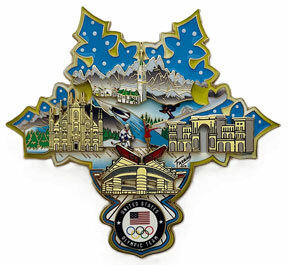 Olympic pin collecting is already its own “unofficial sport,” but Milano Cortina 2026 has poured gasoline on the tradition. Between official merchandise drops, city-themed neighborhood pins, and the return of a dedicated pin trading hub, the Winter Games have turned Milan (and beyond) into a living scavenger hunt—where a few centimeters of enamel can spark lines, swaps, rivalries, and lifelong friendships.
Here’s what’s fueling the 2026 Milan Cortina Olympic pin craze, what kinds of pins collectors are chasing, and why this particular Games feels like a watershed moment for modern Olympic pin culture.
Why Olympic pins still matter in a digital world
The Olympics are increasingly paperless: tickets on phones, schedules in apps, memories stored as camera rolls and highlight clips. Pins are the opposite—physical, durable, and wearable. A great Olympic pin does three jobs at once:
-
Proof of presence: “I was there.”
-
Identity signal: “This is my team/country/city/favorite sport.”
-
Conversation starter: “Want to trade?”
That third part is the magic. Pin trading turns strangers into temporary teammates. It’s part collecting and part social sport: scanning other people’s lanyards and boards, negotiating swaps, and learning the stories behind each design.
Milano Cortina 2026 has leaned into that energy hard.
The official ecosystem: pins you can buy, pins you can only trade
One reason the Milano Cortina 2026 scene feels so alive is that the “pin universe” isn’t just one product line—it’s an ecosystem:
1) Retail pins (easy to start, easy to love)
The official Olympics shop is already packed with Milano Cortina 2026 pin styles, including sport pictograms and playful themed designs (even novelty items like a pizza pin).
These are the gateway pins—perfect for first-time collectors because they’re accessible, consistent, and clearly tied to the event branding.
2) Team/NOC pins (the social currency)
National Olympic Committee pins (and Team pins) are where the trading culture really kicks in. They’re often the pins people wear on lanyards at fan zones, venues, and public transit—because they instantly broadcast where you’re from, who you’re cheering for, and what you might have to trade.
Example: official Team USA retail pins for Milano Cortina 2026 are already being sold through official team shop channels, which also helps legitimize pin collecting as mainstream fandom—not just a niche hobby.
3) Limited editions (where “collecting” becomes “chasing”)
Some pins are designed to be chased: numbered editions, artist collaborations, layered builds, special finishes. Specialty pin retailers are explicitly marketing limited-run Milano Cortina 2026 designs, including individually numbered editions capped at specific quantities.
Whether you love or hate that “drop culture” energy, it undeniably feeds the frenzy.
The Milan neighborhood pin phenomenon: collecting as a city-wide treasure hunt
One of the most Milano Cortina twists is the way the host city has turned pins into a tourism engine.
According to reporting, collectors have been sprinting between landmarks and lining up early for daily limited-edition city pins tied to neighborhoods and local highlights—sometimes with lines hundreds deep.
This is pin collecting as urban adventure: instead of browsing a shop, you’re exploring the city like it’s a game board. Even if you never trade a single pin, the hunt itself becomes the experience.
YesMilano (Milan’s promotional agency) also frames these as “Official Olympic City Pins,” created in collaboration with the Milano Cortina 2026 Foundation.
That “official city” status matters. It gives the pins legitimacy and makes them feel like part of the Games—not just a side souvenir.
The return of an official Pin Trading Center
For collectors, a dedicated “home base” changes everything. Instead of trading only in hallways, plazas, and venue lines, you get a central place where pin culture is expected, organized, and celebrated.
Reporting on Milano Cortina 2026 describes an official pin trading center, including structured trading tables and areas designed to bring in younger collectors—positioning pin trading as both tradition and onboarding pipeline.
That’s a big deal: when a host city supports pin trading infrastructure, it signals that pins are not just tolerated—they’re part of the Games’ fan experience.
Authenticity: why “real” pins matter more in 2026
Every collecting boom brings a shadow economy: knockoffs, unofficial runs, and confusing “almost official” merch. That’s why the Milano Cortina 2026 pin scene has a strong focus on authenticity markers.
One thread running through current coverage is that officially sanctioned pins can be distinguished by specific design elements (like the Olympic rings) and backstamps that identify authorized production.
In other words: in 2026, knowing what you’re holding matters.
If you’re new to pin collecting, this is a useful mindset:
-
Souvenir pins = totally fun, great memories
-
Trade pins = social currency
-
Official/authenticated pins = collectability and long-term value (especially for serious traders)
None is “better” in a moral sense—but they play different roles in the hobby.
Why these pins feel especially collectible
Milano Cortina 2026 has a few built-in advantages that naturally translate into great pins:
The setting is iconic (and visually rich)
“Milan + the Dolomites” is a dream design brief: fashion-capital minimalism meets alpine drama. Even the venues are spread across distinctive locations, which encourages sub-collections built around place (Milan, Cortina d’Ampezzo, Verona, etc.).
Mascot culture is peaking
Mascots aren’t just cute—they’re collectible engines. News coverage around the 2026 mascots highlights fans hunting specific items and the way character-driven merch becomes a must-have category alongside pins and apparel.
When mascots catch fire, pins follow—because mascot pins are easy to trade and instantly recognizable.
Pictograms are made for sets
Olympic pictograms are basically built for completionists. If you buy one sport pin, you’re tempted to “just get the winter sports set.” The official shop’s pictogram pin offerings reinforce that set-collecting urge.
What collectors are actually doing on the ground
The 2026 “craze” isn’t just online hype—it shows up in behavior:
-
Early wake-ups for drops (because limited pins are time-sensitive)
-
Team strategies (friends splitting up to chase different releases)
-
Trading hubs and meetups (making pin culture visible and structured)
-
Tiering and curation (separating “trade fodder” from “keepers” and “grails”)
That last point is key: the mature collector mindset isn’t “get everything.” It’s “build a story.” Milano Cortina 2026 is giving collectors an unusually story-rich menu: neighborhoods, landmarks, sports, mascots, delegations, venues.
How to collect Milano Cortina 2026 pins without losing your mind
If you’re writing a blog—or building your own collection—these practical angles resonate with readers:
Start with a theme
Pick a lane so it feels fun, not chaotic:
-
One pin per sport pictogram
-
Mascot-only pins
-
City/neighborhood series
-
“My Olympics” set (your events, your venues, your travel moments)
Use trades strategically
Bring duplicates of accessible pins for swapping. Retail pins from official outlets are great trade starters because they’re clean, recognizable, and easy to value relative to other retail lines.
Learn authenticity cues
As the market grows, the ability to identify official production markers becomes more important—especially if you plan to trade for higher-demand pieces.
Document your story
Pins are better when they’re anchored to memory. Write the date and location you got it (on a display card or in a notes app). Your “common” pin becomes priceless when it’s tied to the day you saw your first Olympic event live.
The bigger reason the Milano Cortina 2026 pin craze matters
Every Olympics has pins. Not every Olympics turns pins into a city-wide movement.
Milano Cortina 2026 is showing what happens when:
-
the official retail pipeline is robust,
-
the host city gamifies collecting with neighborhood drops,
-
and trading gets a real home base again.
That combination doesn’t just sell pins—it creates collectors. It pulls in casual fans, gives them a simple mission (“find today’s pin”), and then quietly introduces them to the deeper world of trading, rarity, and community.
Recent Posts
-
Collecting MLB Stadium Pins
Collecting MLB Stadium Pins Collecting MLB stadium pins from every ballpark you’ve attended is one o …11th Feb 2026 -
Collecting Super Bowl Champion Lapel Pins
Super Bowl Champion Pin Collecting Collecting Super Bowl Champion lapel pins from every Super Bowl i …11th Feb 2026 -
The History And Popularity Of Olympic Pin Collecting
Olympic Pin Collecting Olympic lapel pin collecting is one of the most colorful—and surprisi …11th Feb 2026