
The History And Popularity Of Olympic Pin Collecting
Olympic Pin Collecting
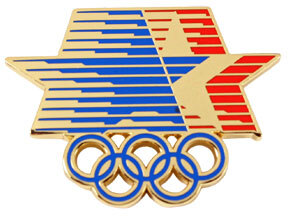 Olympic lapel pin collecting is one of the most colorful—and surprisingly meaningful—traditions tied to the Games. To an outsider, it can look like simple souvenir trading: tiny bits of metal and enamel swapping hands in crowds. But to collectors, pins are miniature time capsules. They carry stories of cities and athletes, volunteers and sponsors, political moments and personal friendships. Over more than a century, Olympic pin collecting has evolved from modest identification badges into a global, unofficial sport of its own—complete with etiquette, rarity, “must-have” designs, and dedicated communities that follow the Olympic flame from host city to host city.
From badges and identity to keepsakes
Long before “pin trading” became a term, pins and badges were practical tools at large events. Early Olympic Games used medals, ribbons, and official badges to identify athletes, officials, and organizers. At the turn of the 20th century, international sport was still formal and club-based; credentials mattered, and small insignia helped communicate role and affiliation quickly. Many of these early items were not “collectibles” in today’s sense—they were functional, limited, and often discarded after the event. That scarcity is exactly why early Olympic badges and pins are highly prized now.
As the modern Olympics grew in size and complexity, these small objects became more than identification. They turned into mementos. When visitors began traveling in larger numbers to host cities, they wanted tangible proof they had been there. Pins fit the bill: durable, affordable, easy to carry, and visually distinctive. Unlike posters or programs, pins could be worn, displayed, and exchanged on the spot. That wearable quality helped create something vital to collecting: visibility. When you can instantly see what someone has, you can instantly want it.
The postwar boom and the rise of Olympic culture
After World War II, the Olympics became a prominent stage for international identity. Countries used the Games to signal recovery, pride, and cultural presence. With more national teams participating and more spectators attending, the market for Olympic memorabilia expanded. Pin production improved too—better enameling, sharper dies, richer colors—and designs became more varied. Instead of a single official badge, there might be pins for national committees, sports federations, host city attractions, and sponsor partners.
This postwar period also helped cement another driver of collecting: diplomacy at ground level. The Olympics are famous for “sports diplomacy” between governments, but collectors often talk about “people diplomacy.” A pin from another country can be a conversation starter when language fails. Trading becomes a small ritual of goodwill: you offer something from your home, they offer something from theirs, and both walk away with a physical reminder of the encounter. That social function is still one of the strongest reasons the hobby persists.
When “pin trading” became an Olympic phenomenon
If early Olympic pin collecting was mostly incidental—people keeping badges or buying souvenirs—pin trading as a widespread, recognizable tradition accelerated as the Games became more commercial and media-saturated in the late 20th century. The biggest shift came when organizers, sponsors, and national teams realized pins were not just trinkets; they were brand storytelling. A well-designed pin could communicate a theme, highlight a mascot, celebrate a sport, or promote a partner.
By the 1980s and 1990s, pin trading had moved from casual swapping to a semi-structured culture. Host cities and organizing committees leaned into it. Sponsors used pins as promotional items. National Olympic Committees produced multi-pin series. Broadcasters and newspapers sometimes released limited sets. Volunteers—highly visible and ubiquitous—became key participants, often receiving official pin packs as part of their uniform. And, crucially, collectors began traveling specifically to trade.
At that point, the hobby took on features of a real collecting ecosystem: price guides, rarity tiers, unofficial trading spots, and early versions of what we now call “drops”—limited releases that create excitement and urgency.
The pin as design object: why people want them
A huge part of Olympic pin popularity is that they’re tiny pieces of design with built-in emotional resonance. The Olympics are already rich with symbols—rings, flames, mascots, pictograms, national flags, iconic venues, and city skylines. That gives pin makers a deep visual toolbox. Host city branding alone can produce dozens of compelling variations.
Pins also age well. A scarf might fray. A program might tear. A pin can survive decades and still look vibrant. That durability makes it perfect for long-term collecting and display. Many collectors use felt boards, shadow boxes, banners, or “trading jackets” covered in pins—a wearable gallery that invites conversation. Some create thematic displays: a timeline by host city, a wall of mascots, a board of national flags, or a single sport across multiple Games. Because each pin is small, collecting feels incremental and achievable: you can start with one and build a story over years.
Rarity, meaning, and the thrill of the hunt
Like any collectible, Olympic pins gain allure through scarcity and story. Some are common—official souvenirs sold in large quantities. Others are hard to get: athlete-only pins, delegation pins that never reached public sale, sponsor or VIP pins, staff-only series, or limited runs created for internal teams. A pin might be rare because it was produced in low numbers, but it can also be “rare” socially—few people are willing to trade it.
The “thrill of the hunt” is a major reason pin trading feels like an Olympic sub-event. Trading is interactive, strategic, and surprisingly personal. You learn quickly that not all pins are equal in the eyes of a collector. Condition matters. Manufacturer variants matter. Misprints can be valuable. Sets are often more coveted than single pins. Certain years, mascots, or host cities become especially hot. Over time, collectors develop their own rules—what they’ll trade, what they’ll keep, what they’ll chase.
And then there’s sentimental rarity, which can’t be priced. A pin traded with a volunteer who helped you find your seat during your first Olympics, or a pin swapped with a fan who traveled from the other side of the world, can be irreplaceable. Many collectors will tell you the best pins are the ones with a story attached.
Trading culture and etiquette
Pin trading thrives because it is, at its core, a social agreement. Most collectors follow an informal etiquette: be respectful, don’t pressure someone to trade, don’t misrepresent what you’re offering, and remember that “no” is a complete sentence. Many collectors will trade “like for like”—team for team, sponsor for sponsor, or comparable rarity for comparable rarity—though part of the fun is negotiating creative deals.
Trading also requires trust. In busy Olympic environments, collectors often trade quickly. Over time, experienced traders learn to spot quality (is the pin sturdy? is the enamel clean? is the backstamp legitimate?), and they learn to avoid fakes. As with any popular collectible, counterfeits and reproductions exist, especially for high-demand designs. That risk has pushed the community to share knowledge and encourage provenance: knowing where a pin came from and how to verify it.
The internet era: from in-person swaps to global communities
The rise of online forums, social media groups, and marketplace platforms transformed Olympic pin collecting. Before the internet, the primary way to trade was at the Games, via mail among established collectors, or through specialized memorabilia shows. Online communication made it easier to find trading partners year-round, track down specific pins, and learn about new releases. It also expanded the hobby beyond those who could afford to attend the Olympics in person.
This shift made collecting more democratic in one way—more access, more information—but also more competitive. When a limited pin appears online, demand can spike instantly. Prices can rise quickly. Scarcity becomes global, not local. Still, the core attraction remains: connection. Many collectors form friendships that span multiple Olympiads, meeting again and again in new host cities like a moving reunion.
Why Olympic pins remain popular today
Olympic lapel pin collecting has endured because it sits at the intersection of sport, art, and human connection. The Olympics themselves are periodic—they arrive, burn brightly, and move on. Pins are one of the most tangible ways to hold onto that fleeting experience. They’re also accessible: you don’t need a museum budget to start. One pin can be the beginning of a collection, a conversation, or a tradition passed through families.
There’s also a deeper cultural appeal. The Olympics are about nations, but they’re also about individuals—athletes’ stories, volunteers’ pride, fans’ pilgrimages. A pin can represent all of that in a single object you can hold between your fingers. When you trade pins, you’re not just exchanging metal. You’re acknowledging each other’s presence at a moment in global history.
In a world where many experiences are increasingly digital—tickets on phones, photos in clouds, memories in feeds—pins are delightfully physical. They have weight. They catch light. They take up space on a jacket or board. They demand to be seen. That tactile permanence is part of the charm.
The future: tradition with room to evolve
As the Games continue to evolve, so will pin collecting. New host cities bring new design languages. Sustainability concerns may influence materials and production. Digital authentication might become more common to combat counterfeiting and track provenance. But it’s hard to imagine Olympic pin trading disappearing, because it serves something the Olympics will always generate: a desire to connect across borders in a shared celebration.
Ultimately, Olympic lapel pin collecting is popular for the same reason the Olympics are popular. It’s a global ritual—part competition, part pageantry, part community. Pins simply give that ritual a portable form. For collectors, each one is a tiny badge of belonging, proof of participation in something larger than themselves, and a reminder that the best souvenirs aren’t bought. They’re earned through shared moments and traded stories.
If you’d like, I can also add a short “How to Start Collecting” section (where to trade, how to store/display, how to avoid fakes) and tailor it to beginners or to serious collectors.
Recent Posts
-
Collecting MLB Stadium Pins
Collecting MLB Stadium Pins Collecting MLB stadium pins from every ballpark you’ve attended is one o …11th Feb 2026 Classic Pins -
Collecting Super Bowl Champion Lapel Pins
Super Bowl Champion Pin Collecting Collecting Super Bowl Champion lapel pins from every Super Bowl i …11th Feb 2026 Classic Pins -
The History And Popularity Of Olympic Pin Collecting
Olympic Pin Collecting Olympic lapel pin collecting is one of the most colorful—and surprisi …11th Feb 2026 Classic Pins